
Explore the quieter side of Ubud through hidden tourist spots
Most travelers who visit Ubud end up at the same three spots. Tegallalang Rice Terrace. Monkey Forest. Tirta Empul. These are beautiful places. But Ubud has far more to offer.
The hidden gems in Ubud are the spots that locals know, that long-stay travelers stumble upon by accident, and that rarely appear on the first page of travel blogs. This list covers 12 of them. Some are temples. Some are villages. Some are natural sites that will stop you mid-step.
If you want to experience Ubud the way it actually feels to those who live here, this is where to start.
Ubud sits at the cultural heart of Bali. It is not a beach town. It is a place of ritual, craft, rice farming, and art. The energy here is slower and more intentional than in Seminyak or Kuta.
That quality is exactly what draws a certain kind of traveler. People who want texture in their trip. People who want to understand where they are, not just photograph it.
The hidden gems in Ubud deliver that. They reward the curious traveler who is willing to walk a little further, wake up a little earlier, or take a road without a sign.
Most visitors go to Tirta Empul for water purification rituals and wait in long queues for hours. Pura Gunung Kawi Sebatu sits just a few kilometers away and offers nearly the same sacred experience with far fewer people.
The temple has clear spring pools, stone carvings, and an atmosphere that feels genuinely untouched. If you want to experience a melukat ceremony without the rush, this is the place. Arrive before 8 AM for the quietest conditions.
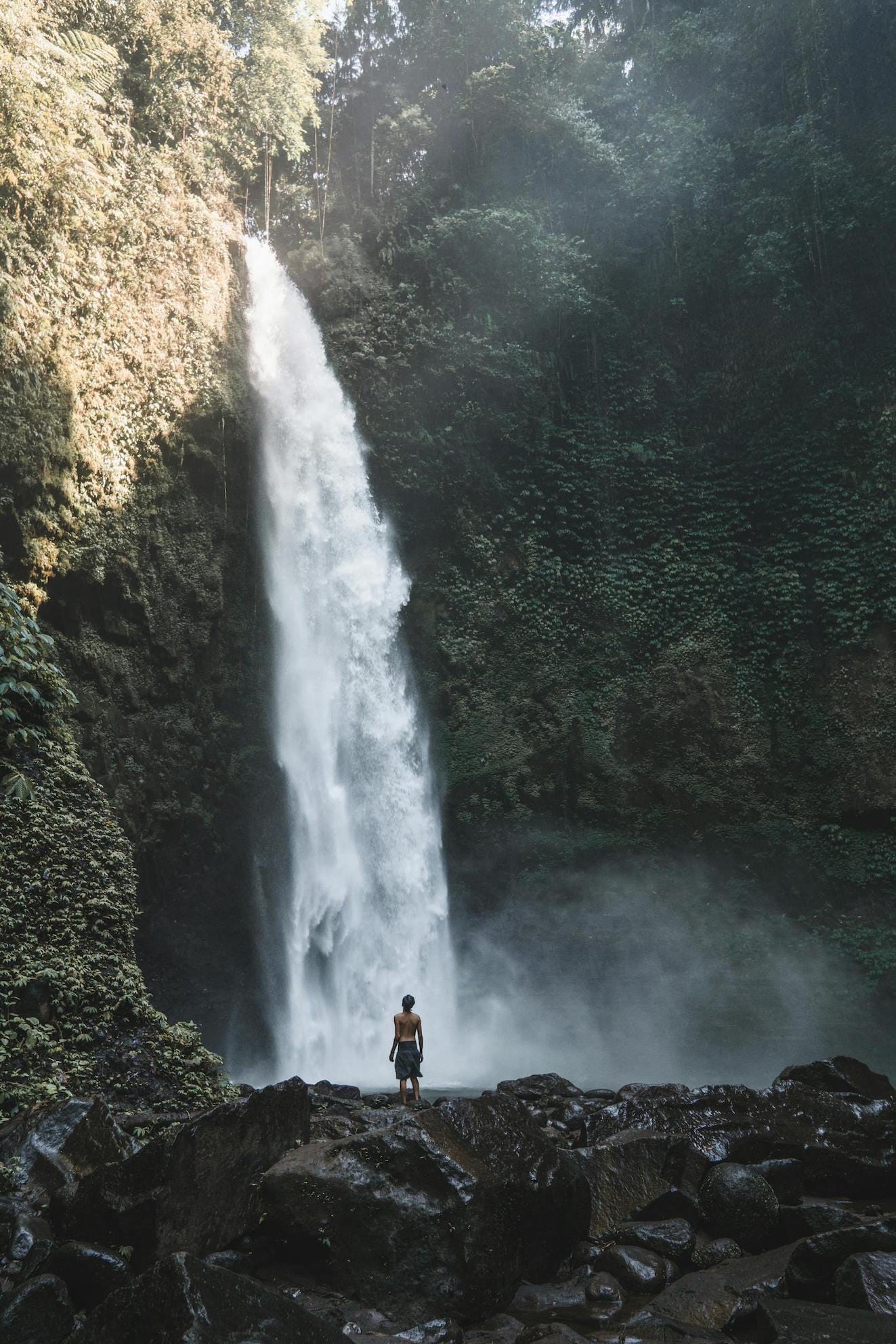
This waterfall hides inside a narrow cave. To reach it, you walk down a steep gorge, through a shallow river, and into an opening where sunlight cuts through in concentrated beams. The effect is unlike anything else in Bali.
The hike takes about 20 minutes from the parking area. Wear sandals you can get wet. Go between 9 AM and 11 AM when the light enters the cave at the right angle.
Most travelers do the Campuhan Ridge Walk late in the morning after breakfast. By then, it is already warm and the path has other visitors.
Walk it at 6 AM and you will have rolling green hills almost entirely to yourself. The air is cool. The light is soft. This is one of the most peaceful experiences available in Ubud and it costs nothing.
Penglipuran is one of the cleanest and most preserved traditional villages in Bali. The bamboo gates, stone paths, and identical compound entrances reflect a community that has maintained its structure for generations.
The village is located about 45 minutes from Ubud center toward Kintamani. The entrance fee is around IDR 30,000. It is not completely off the tourist map, but most people skip it because it requires a dedicated trip. That is exactly why it is worth going.
Goa Garba is a meditation cave tucked into the jungle near the Petanu River. It is a sacred site with far less foot traffic than Goa Gajah, which sits just a short drive away.
The cave requires some navigation through forest paths. Wear clothes you can move in. Bring a local guide if it is your first visit. The silence inside the cave is one of the more striking experiences available in the Ubud area.
At the end of the Campuhan Ridge Walk, you will find Pura Gunung Lebah sitting at the confluence of two rivers. The temple dates to the 8th century and is dedicated to the goddess of Mount Batur.
Because it sits at the far end of a walking trail, it sees far fewer visitors than temples closer to the main road. The surrounding trees and river sounds make it one of the more atmospheric spots in Ubud.
Keliki is a small artists’ village north of Ubud. It has been home to a community of painters for decades, many working in the fine-detail style that Ubud is historically known for.
You can walk through the village, visit working studios, and speak directly with artists about their process. There are no large galleries or commercial pressure here. It is a quiet, slow afternoon kind of place.
Tirta Gangga sits about 90 minutes east of Ubud toward Karangasem. It is a royal water palace with lotus ponds, stepping stone paths, and mountain views behind it.
The journey there takes you through rice terraces and small villages that feel genuinely rural. The palace itself is calm and photogenic without the density of visitors you find at popular Ubud spots.
Most people drive directly to Lempuyang Temple and back. The small villages along the road leading there, however, are worth slowing down for.
Traditional weaving, palm sugar production, and roadside canang sari making are visible in everyday life here. Stop when you see something interesting. Ask permission before photographing. These interactions are often the most memorable parts of a Bali trip.
Sebatu offers a melukat experience in clean, shallow pools surrounded by trees and open sky. It sits in the Tegallalang area and receives a fraction of the visitors that Tirta Empul does.
The entrance fee is around IDR 30,000. The pools are fed by natural springs. The atmosphere is calm enough that you can actually focus on the ritual rather than waiting for someone to move out of your way.
Goa Gajah appears on some tourist lists, but most visitors spend only 20 minutes here and miss the best parts. Past the main cave entrance, there is a terraced garden that leads down to a jungle river.
Sit by the river for a while. It was used for meditation for good reason. The cave itself dates to the 11th century and the carvings around the entrance are detailed enough to spend real time studying.
Nagi is a small settlement between Ubud and Payogan that most travelers pass without stopping. It sits at the edge of a river gorge and has some of the most undisturbed rice field views in the entire area.
There are no entrance fees, no formal attractions, and no guides stationed at the entry point. You simply walk in, follow the paths between the fields, and find your own sense of where you are.
A few practical notes before you plan your days.
Timing matters more than anything. Almost every location on this list is better before 9 AM or after 4 PM. Midday brings heat and the bulk of day-trip tourists from southern Bali.
Hiring a local driver for the day costs around IDR 400,000 to 600,000 and gives you flexibility that rented scooters cannot always provide, especially for the locations outside Ubud center.
Dress for temples. Sarong and sash are required at all sacred sites. Many locations provide them for a small fee, but bringing your own shows respect and saves time.
Be patient with dirt roads. Some of these locations are accessible only by narrow lanes. That is part of why they remain uncrowded.
The right accommodation makes a meaningful difference when you are trying to reach these spots without spending half your day in transit.
Gopala Villa North Ubud places you in the quieter northern section of the Ubud area. It is a three-bedroom private villa with a pool and garden, designed for families and small groups. From here, Penglipuran, Keliki, and the ridge walk are all within easy reach.
Nobody Inn Ubud sits closer to central Ubud and functions as a practical base for longer stays. It has high-speed Wi-Fi, a shared lounge, and walkable access to many of the spots in this list. It is well suited for solo travelers and those who work remotely while they explore.
Both properties are managed by Aligna Hospitality, a Bali-based management company built on the principle that accommodation should connect guests to the place they are visiting, not isolate them from it.
Aligna Hospitality currently runs a Green Season offer for direct bookings. Book three consecutive nights and your fourth night is complimentary. Use the code STAY3PAY2 when booking directly to apply the benefit. The offer is subject to seasonal availability, so contact the Aligna team to confirm before booking. If the stay is shortened after check-in, the complimentary night is forfeited.
Staying close to Ubud with a reliable property as your base means you spend your time actually seeing these places, not planning logistics from a hotel lobby far from where you want to be.
The famous spots in Ubud are famous for a reason. They are worth seeing. But the hidden gems in Ubud are what make people come back.
They are quieter, more personal, and more likely to produce the kind of moment you actually remember. A beam of light inside a cave. A painter who invites you in to watch him work. A river that you did not expect to find at the end of a temple path.
Ubud has layers. The travelers who take the time to find them are the ones who leave understanding what Bali actually is.
Discover Ubud beyond the ordinary, where serenity and culture meet in every corner. Stay with Aligna Hospitality properties for a soulful escape surrounded by Bali’s timeless beauty.