
Which Model Works for Your Property
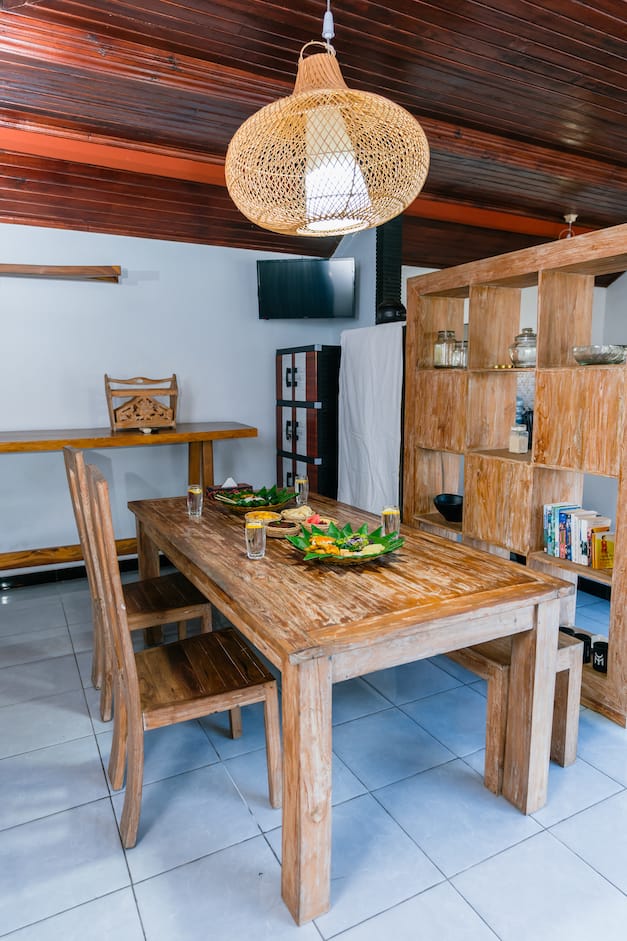
Owning a villa or guest house in Bali means making one fundamental decision before anything else. Do you rent it short-term or long-term?
Both models work. Both have trade-offs. The right answer depends on your property type, your location, how much involvement you want in day-to-day operations, and what kind of return you are targeting.
This guide breaks down short-term vs long-term rental in Bali across every area that matters: revenue, operations, legal requirements, tenant profiles, and property fit.
A short-term rental in Bali means renting your property by the night, week, or month. Guests book through platforms like Airbnb or Booking.com, or directly through a property website. Stays typically range from two nights to four weeks. The property is listed and managed as an active accommodation business.
A long-term rental means renting your property for a fixed period. Most long-term contracts in Bali run for six months, one year, or longer. Payment is usually collected upfront for the full contract period. The tenant treats the property as their temporary home.
The operational gap between the two is significant. Understanding it before you decide which model to pursue saves considerable time and money.
Short-term rental generates higher revenue per night. A villa in Ubud that rents for IDR 1,200,000 to 2,500,000 per night on a short-term basis would earn far less per night if rented long-term. Monthly long-term rates for comparable properties in Ubud typically run between IDR 8,000,000 and 18,000,000 depending on size, location, and condition.
At full occupancy, short-term rental outperforms long-term rental by a wide margin. The word “full” carries the most weight in that sentence.
The practical occupancy rate for short-term villas in Bali varies by season, location, and management quality. A well-managed villa in a strong location can achieve 70 to 80 percent annual occupancy. A poorly managed property in the same location might sit at 40 to 50 percent. The difference between those two numbers changes the revenue comparison entirely.
Long-term rental delivers lower monthly income but that income is guaranteed for the duration of the contract. There are no gaps between bookings. No sudden drops in January. No need to discount heavily during the wet season. The tenant pays upfront and the income is predictable.
For owners who need reliable monthly income without operational involvement, long-term rental often delivers better net income than an underperforming short-term property after costs.
Short-term rental is operationally intensive. Every checkout triggers a full cleaning cycle. Linen needs washing and restocking. The pool needs checking before the next arrival. Any maintenance issue must be resolved before the next guest arrives. Guest inquiries come in at any hour. Check-in and check-out coordination requires someone available and responsive.
Multiply this by 20 bookings per month and the workload is substantial. Without a professional management layer, most owners who try to handle short-term operations remotely find that the property underperforms and the experience is frustrating.
Long-term rental requires far less active management. Once a tenant is in place, your involvement drops sharply. Utility payments shift to the tenant. Cleaning is the tenant’s responsibility. Maintenance requests are less frequent. The main management task is vetting tenants carefully before signing the contract and maintaining the property between tenancies.
The operational cost difference between the two models is real and measurable. Short-term management costs, covering platform fees, cleaning, linen, staff, and maintenance, typically consume 35 to 50 percent of gross revenue. Long-term rental has much lower ongoing costs, with most operational expenses passing to the tenant by contract.
This area is one of the most important practical differences between the two models.
Short-term rental in Bali requires a Pondok Wisata license, which is the official permit for operating a property as a hospitality business. Without this license, operating a short-term rental is technically illegal under Indonesian law. Enforcement has increased in recent years, particularly in areas with high villa density. Properties without proper licensing face fines, forced closure, and complications during property sales.
The Pondok Wisata license is only available for zoned tourism land. Properties on agricultural or residential-zoned land cannot obtain this license, which means they cannot legally operate as short-term rentals.
Long-term rental does not require a Pondok Wisata license. A property rented to a tenant for six months or more falls under a different legal category. This opens up the rental market for properties that sit on non-tourism land.
For owners who purchased property without confirming the zoning for short-term use, long-term rental may be the only compliant option available.
Short-term guests are on holiday. Their expectations are high and they want convenience. They expect the property to look like the photos. They notice things that a long-term tenant would not report. A stain on a pillow, a slow drain, a wifi router that drops occasionally. All of these become review points.
Managing a short-term rental property means managing the gap between expectation and experience at scale. When that gap is well managed, the reviews are strong and the bookings follow. When it is not, the review score drops and visibility on booking platforms falls with it.
Long-term tenants in Bali include digital nomads staying for one to three months, expats on work assignments, families between housing arrangements, and Indonesian professionals relocating for work. This tenant profile is generally more practical and less demanding than a short-term holiday guest. They understand that a rental property is not a hotel. They report genuine maintenance issues and look after the property more consistently than rotating short-stay guests.
The caveat is that tenant selection matters. A long-term tenant who damages the property or stops maintaining it cannot be asked to leave the next day. Review the contract carefully and collect a meaningful security deposit before handing over the keys.
Not every villa in Bali suits short-term rental. Not every property suits long-term rental either. The right model depends on several factors.
Location is the primary one. Properties close to cultural sites, popular rice terraces, and tourism infrastructure in areas like Ubud, Canggu, and Seminyak generate consistent short-term demand. Properties in quieter residential areas, further from the tourism center, attract stronger long-term tenant interest from nomads and expats but generate weaker nightly short-term demand.
Layout and specification matter for long-term rental. A villa designed for holiday guests prioritizes visual impact, bedroom count, and pool aesthetics. A long-term tenant cares about kitchen functionality, storage space, reliable utilities, parking, and durable materials. These two property briefs overlap but are not identical. Owners who want to attract quality long-term tenants at competitive rates sometimes need to modify their property to fit that use case.
Bedroom count affects both models. A two-bedroom villa in central Ubud can perform strongly as a short-term rental. The same property suits a couple or solo professional for a long-term stay. A five-bedroom villa suits large family short-term bookings but is harder to place as a long-term rental because the tenant pool for that size is smaller.
Pool villas in Bali almost always perform better in the short-term market. The pool is a primary booking driver for holiday guests. Long-term tenants value the pool but will not pay a proportional premium for it the way a holiday guest will.
Short-term rental performance in Bali follows clear seasonal patterns. The dry season from April through October drives peak demand and peak rates. July and August are the highest-earning months. The wet season from November through March sees occupancy drop at many properties, particularly those in less established locations.
An owner operating in the short-term market needs a pricing and marketing strategy that accounts for this seasonality. Strong wet season occupancy requires competitive pricing, an active direct booking channel, and marketing that targets the specific guest types who visit Bali during these months.
Long-term rental is essentially immune to seasonal demand fluctuation. A tenant on a one-year contract pays the same rate in January that they pay in August. For owners who want to avoid managing occupancy gaps and seasonal pricing adjustments, this stability is a genuine advantage.
Some Bali villa owners operate a hybrid approach. They use short-term rental during the peak dry season months, when nightly rates are highest, and shift the property to a medium-term or long-term rental model during the wet season to maintain occupancy and income.
This works best with properties that can accommodate month-long stays on short-term terms. Remote workers and digital nomads who visit Bali during the wet season often book for four to eight weeks. This profile fits between the two models. The stay is longer than a holiday booking but shorter than a formal long-term contract.
Managing this hybrid approach requires flexibility in your contract terms, a booking platform that supports monthly stays, and a management partner who can switch between operating modes without confusion.
Bali’s property market has matured. Supply in high-demand short-term rental areas like Canggu and Seminyak has increased sharply. That means competition for short-term bookings is higher. Owners who could achieve strong occupancy passively a few years ago now need active management, dynamic pricing, and consistent marketing to maintain the same results.
At the same time, the long-term rental market in Bali has deepened. The growth of the remote work economy has created a stable tenant pool of professionals who stay for one to three months and pay rates that work well for property owners who want lower operational complexity.
The question for 2026 is not which model is better in absolute terms. The question is which model your specific property can support and which one you have the management infrastructure to run well.
Short-term rental in Bali earns more per night and gives you flexibility over how you use the property. It requires active management, proper licensing, a strong marketing presence, and consistent operational standards. Without those elements in place, the revenue potential rarely materializes.
Long-term rental earns less per night but delivers predictable income, lower operational costs, no licensing requirement for non-tourism zoned properties, and far less day-to-day management. It suits owners who want stability over maximum revenue optimization.
Most owners who are dissatisfied with their Bali property investment are not in the wrong model. They are in the right model but without the management support to execute it properly.
Aligna Hospitality manages private villas, boutique hotels, and guest houses across the Ubud area. The management approach covers short-term operations in full, from dynamic pricing and multi-channel booking management to daily operations, maintenance, and guest communication. For owners considering medium-term or longer stays, Aligna’s direct booking platform also supports monthly rental arrangements.
For owners at the decision point between short-term vs long-term rental in Bali, Aligna’s team provides a property assessment that gives you a clear picture of which model your property is positioned for, what it would take to optimize either approach, and what professional management would cost against what it would realistically earn.
Contact the Aligna team to start that conversation.
Comfort, convenience, and stability. Settle into island life with Aligna Hospitality.