
The month after the August rush, when Ubud is still dry, still green, and finally quiet.

August fills Ubud. The cafés queue, the ridge walk crowds at sunrise and villa rates hold firm. Then September arrives and the island exhales.
It is the quietest good month in Ubud: still dry, still green, the crowds gone but nothing closed. Here is why it works, and how to use it.
European holidays end and the Australian school break closes. Roads that crawled through August move again, and the restaurant that needed a booking last month now has a table by the window.
September sits at the tail of Bali’s dry months. Expect warm days, cooler evenings in the hills around Ubud, and rain that stays brief if it comes at all.
Between the August peak and the Christmas one, villa pricing eases. The private pool that was fully booked a month earlier is often free, and cheaper, for a longer stay.
Campuhan Ridge at sunrise, a cooking class in a family compound, a silversmithing morning in Celuk. All of them are better with fewer people in them, and September is when you get them that way.
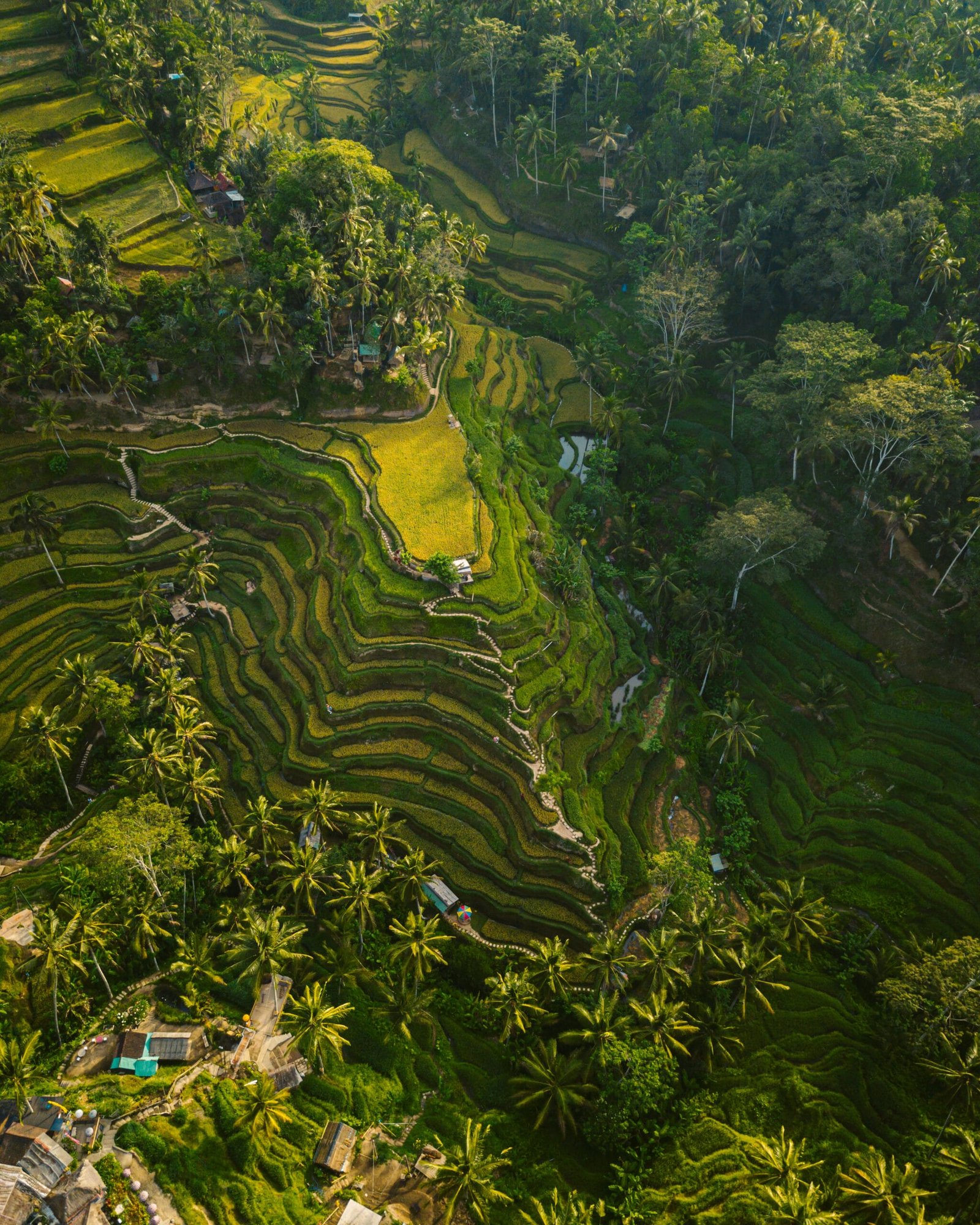
North of Ubud the rice cycle carries on through September. You see farmers in the fields, ducks let loose after harvest and the irrigation channels running: the working version of the landscape rather than the postcard.
Balinese ceremonies follow their own calendars, not the tourist season. A quiet month on the roads is still a full one at the temples, and you are far more likely to be welcomed to watch when the village is not overwhelmed.
If September has slipped past, the window does not close on the last day of the month. Early October holds the same calm, the same green and the same softer rates, right until the island begins filling for the holidays.
Plan Your Ubud Stay
Trade the crowds for a garden and a private pool. Explore the Aligna Hospitality collection of villas in and around Ubud.