
What It Actually Costs and What to Expect
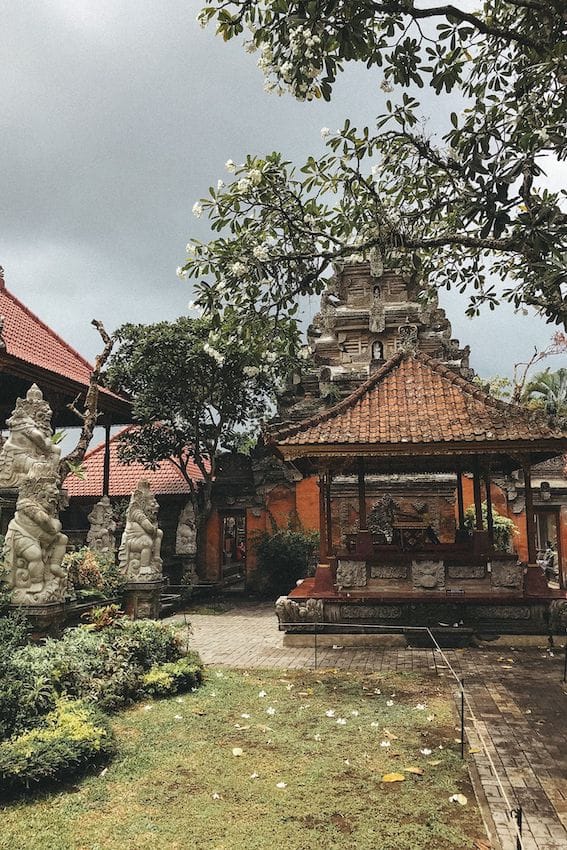
Living in Ubud for a month is not the same as visiting Ubud for a week. The pace shifts. You stop treating every temple and rice terrace as a destination to photograph. You develop routines. You find a warung you return to every few days. The town stops feeling like a place you are passing through.
This guide covers everything you need to plan a month-long stay in Ubud. Costs, accommodation, work infrastructure, daily life, transport, food, and what to do when you are not working.
A month in Ubud works well for four types of people. Digital nomads who want to work from a new base without constantly moving. Freelancers or remote workers using slower periods to reset. Travelers on extended trips who want cultural depth over beach clubs. Couples or solo travelers who want a meaningful stay rather than a highlight reel.
Ubud sits at 300 to 600 meters elevation in Bali’s central highlands. The temperature stays between 23 and 30 degrees Celsius year-round. It is cooler than the coast, which makes longer stays more comfortable. The air is cleaner. The road noise drops significantly once you move even slightly outside the town center.
One month gives you enough time to go beyond tourist mode. You stop rushing. You start noticing things you would have missed in a week.
Accommodation takes the largest share of your budget. The cost depends on whether you rent through a short-stay platform or negotiate a monthly rate directly with a guesthouse or villa.
A basic private room in a guesthouse with air conditioning, daily cleaning, and Wi-Fi costs between IDR 3,000,000 and IDR 5,500,000 per month. That is roughly USD 190 to 350.
A private bungalow or one-bedroom villa with a garden, open-air bathroom, and kitchen access costs between IDR 5,500,000 and IDR 10,000,000 per month. That is USD 350 to 650. Some include daily cleaning. Some do not. Confirm before you commit.
A private villa with a pool for groups or couples starts around IDR 10,000,000 to 18,000,000 per month. That is USD 650 to 1,150.
Monthly rates are almost always lower than the sum of weekly rates. If you book a property and stay for 28 days or more, ask directly about a monthly discount. Most guesthouses and villa managers will offer one.
Food costs are low. A full meal at a local warung costs IDR 30,000 to 55,000. That is USD 2 to 3.50. A meal at a mid-range café on Jalan Hanoman or Jalan Dewi Sita costs IDR 60,000 to 150,000. Budget travelers can eat well on IDR 150,000 per day for food. Travelers who eat at nicer places spend IDR 250,000 to 400,000 per day.
Scooter rental runs around IDR 500,000 to 600,000 per month for a basic automatic. You can rent by the day for IDR 50,000 to 70,000 if you only need it occasionally.
A local SIM card with a data plan costs around IDR 100,000 to 200,000 per month. Telkomsel and XL both have strong coverage in the Ubud area.
Budget traveler: USD 700 to 900 per month. Includes basic accommodation, warung meals, and scooter.
Mid-range traveler: USD 1,100 to 1,600 per month. Includes a private bungalow, a mix of warungs and cafes, coworking access, and some activities.
Comfortable traveler: USD 1,800 to 2,800 per month. Includes a private pool villa, dining at quality restaurants, wellness activities, and full transport.
Ubud has a functioning infrastructure for remote work. Internet speeds have improved significantly. Most cafes and coworking spaces offer fiber connections.
Hubud is the oldest and most established coworking space in Ubud. It sits in a bamboo structure above rice fields near Jalan Monkey Forest. A monthly membership costs around USD 250 to 280. Day passes are available for IDR 150,000. The community is active and international.
Outpost Ubud has two locations in the area. Monthly memberships start around USD 180 to 220. The space attracts a mix of nomads, creative professionals, and startup founders. Both locations have fast internet, event programs, and pool access.
If you prefer working from cafes, Seniman Coffee Studio on Jalan Sri Wedari has reliable Wi-Fi and good coffee. Locavore To Go on Jalan Dewi Sita is another solid option. Clear Cafe near Campuhan has outdoor seating, solid internet, and a focused atmosphere.
Internet speeds in Ubud center and along Jalan Hanoman are generally fast enough for video calls, file uploads, and cloud-based work. In more rural areas outside the center, speeds can drop during peak hours. Test your accommodation’s connection before you commit to a full month.
A typical day living in Ubud for a month looks different depending on where you stay and what you prioritize. Here is a realistic structure for a remote worker.
Mornings start early. The surrounding villages are active from sunrise. Roosters and temple bells are part of the soundscape. Most long-term Ubud residents develop a 6 to 7 AM wake-up naturally.
The Campuhan Ridge Walk takes about 45 minutes and starts less than 10 minutes from the town center. Walking it before 7 AM gives you the path mostly to yourself. It is a practical morning activity rather than a tourist excursion.
Most coworking spaces and productive cafes open between 7 and 9 AM. Peak working hours run from mid-morning through early afternoon. Afternoons in Ubud can be warm and humid, which makes a covered workspace more comfortable than outdoor seating.
Late afternoons are the best time for activities outside work. Cooking classes, temple visits, and spa treatments all work well between 3 and 6 PM. Ubud is not a nightlife town. Most restaurants close by 10 PM. The rhythm of the town naturally shifts toward an early morning, early evening pattern.
Food is one of the strongest reasons people stay in Ubud longer than planned.
Local warungs serve nasi campur (rice with mixed sides), mie goreng (fried noodles), and gado-gado (vegetables with peanut sauce) for IDR 25,000 to 45,000. Warung Ibu Oka near the market is popular. Bale Udang Mang Engking near Penestanan is good for a longer sit-down meal.
The Ubud market on Jalan Raya Ubud operates from 6 AM and sells fresh produce, tropical fruit, and local ingredients at low prices. If your accommodation has a kitchen, buying from the market and cooking several meals per week reduces your food spend significantly.
For higher-quality dining, Locavore on Jalan Dewi Sita is widely considered one of the best restaurants in Bali. A tasting menu costs around USD 80 to 100 per person. For a significant meal during a longer stay, it is worth the cost.
Health food cafes and plant-based restaurants are common along Jalan Hanoman. Sayuri Healing Food and Alchemy both offer raw and vegan menus. These cafes are more expensive than warungs but significantly cheaper than equivalent places in Canggu or Seminyak.
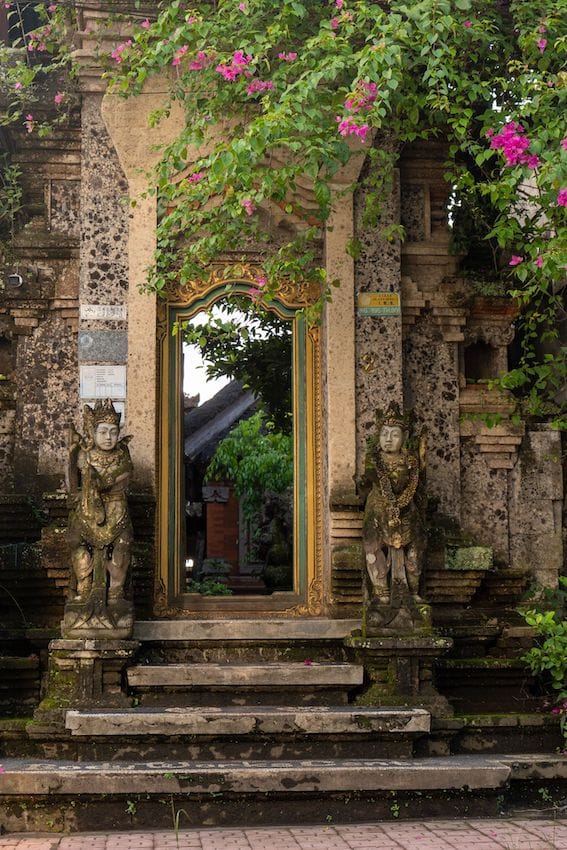
A month gives you time to go deeper on activities that a short visit only allows you to skim.
Temple ceremonies happen regularly in the surrounding villages. Galungan and Kuningan, if they fall during your stay, transform the roads with bamboo penjor poles and offer access to processions that you cannot plan around in advance. Ask locals or check a Balinese calendar for upcoming ceremony dates.
A Balinese cooking class at Paon Bali or Casa Luna costs around IDR 250,000 to 400,000 and takes about four hours. It covers local market shopping, spice preparation, and the cooking of five to six traditional dishes. Doing this once during a longer stay gives you context for the food you eat every day.
The Neka Art Museum on Jalan Raya Sanggingan holds a collection of Balinese painting across multiple styles. The entrance fee is around IDR 75,000. A month-long stay gives you the opportunity to return rather than rushing through in a single visit.
Day trips from Ubud are easy by scooter or hired driver. Mount Batur sunrise trek takes a full morning. Tegallalang, Tirta Empul, and Gunung Kawi are all within 30 minutes. The coast at Sanur is about 45 minutes. A trip to Sidemen, Karangasem, or the eastern rice terraces near Rendang takes a full day and is worth it for the scenery.
Yoga and wellness options in Ubud are extensive. The Yoga Barn on Jalan Hanoman runs a full daily schedule. Drop-in classes cost around IDR 100,000 to 130,000. Monthly passes are available if you plan to attend regularly.
Balinese massage in Ubud costs IDR 100,000 to 150,000 for a 60-minute session at local spas. Higher-end spa experiences at properties around the Ayung River cost IDR 400,000 to 800,000 and include views of the river gorge.
A scooter is the most practical transport option for a month-long stay. The town center is walkable, but most places worth visiting outside the center require wheels.
Traffic in Ubud center, particularly on Jalan Raya Ubud and Jalan Monkey Forest, is heavy during late morning and early afternoon. Plan errands and activities for early morning or late afternoon to avoid the congestion.
Hiring a private driver for full-day trips costs IDR 400,000 to 600,000. This is the right option for longer-distance trips to Kintamani, Uluwatu, or the airport. For daily movement around Ubud, a scooter is more practical.
You can get a local SIM card at the airport or at Telkomsel and XL stores in the Ubud center. Register it with your passport. Data plans are inexpensive and reliable for most of Ubud.
The rainy season runs from November through March. Rain typically falls in afternoon showers rather than all-day downpours. Mornings are usually clear. A month during the wet season is quieter, cheaper, and greener than the dry season. The trade-off is some outdoor activities are less accessible after heavy rain.
Carry a physical copy of your passport details or a digital scan. Some guesthouses and coworking spaces require passport registration under Indonesian regulations.
Withdraw cash from ATMs in Ubud center rather than exchanging currency at the airport. Airport exchange rates are significantly worse than in-town rates. BCA and Mandiri ATMs in Ubud center are reliable.
Bring a power adapter for Indonesian plugs (Type C or Type F). Bring a portable water filter or plan to buy filtered water. Tap water in Ubud is not safe to drink.
Choosing the right property for a month-long stay matters more than it does for a short trip. You need reliable internet, a space where you can genuinely rest, and a team you can contact if something needs attention.
Aligna Hospitality manages a selection of properties in the Ubud area suited to longer stays. Whether you want a private villa with a pool for a couples retreat, a guest house close to the town center, or a property with full kitchen access for independent living, the Aligna portfolio covers different budgets and stay styles.
For guests who book directly through Aligna, the current Green Season promotion gives you one complimentary night for every three consecutive nights booked. Use the code STAY3PAY2 when booking. The offer is subject to seasonal availability. Contact the Aligna team before booking to confirm which properties qualify and which dates are open.
A month in Ubud planned properly costs less than most people expect and delivers more than most short trips can.
Wake up to lush rice fields, mindful mornings, and the gentle rhythm of Bali. Spend a month embracing local culture, wellness, and a slower pace of life with Aligna Hospitality.