
Which Part of Bali Is Right for You
Bali is not one destination. Each area has a different pace, a different guest profile, and a different set of things to do.
When travelers compare Ubud vs Canggu vs Seminyak, they are really asking a simpler question. What kind of trip do I actually want?
This guide breaks down each area by lifestyle fit, cost, attractions, and who it suits best. Read it once and you will know where to book.
Choose Ubud if you want culture, nature, quiet mornings, and value for money.
Choose Canggu if you want surf, a social scene, and a base for remote work.
Choose Seminyak if you want fine dining, beach clubs, nightlife, and a walkable coastal strip.
If you have seven or more days, split your stay between two areas. Most travelers who do this say Ubud made the trip feel meaningful, and the coast made it feel fun.
Ubud sits in Bali’s central highlands. The air is cooler than the coast by several degrees. The streets are narrower. Temple ceremonies happen in the surrounding villages on a weekly basis. You hear gamelan music at dusk. Rice fields begin where the town ends.
The pace here is slower and more intentional. Travelers who visit Ubud tend to stay longer than planned. The area rewards walking without a destination.
Canggu is louder and more active. Surf breaks are a few minutes from the main road. Coffee shops with reliable Wi-Fi sit alongside rice fields. New cafes open regularly. The social energy is high, and meeting other travelers here happens naturally.
Road traffic in Canggu is genuinely heavy during peak hours. Plan around it or it will plan your day for you.
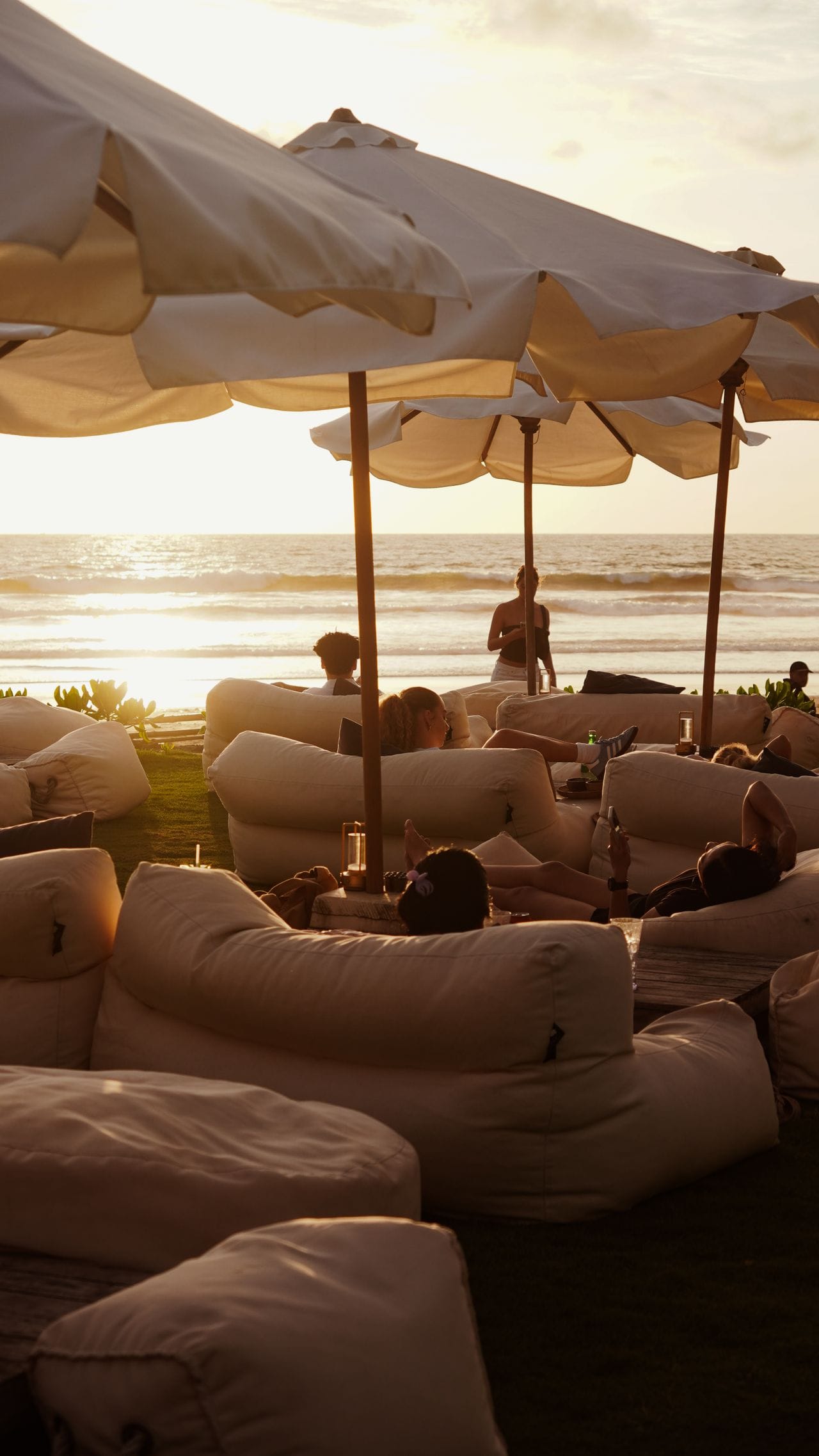
Seminyak is the most developed of the three. The streets are wider, the restaurants are more polished, and the beach is accessible and calm. Sunset draws crowds to the beach clubs every evening. The area runs on a dining and nightlife rhythm that peaks after 7 PM.
It is the easiest area to navigate and the most commercially oriented.
Ubud is the most affordable of the three. A private villa with a pool and garden costs significantly less here than an equivalent property in Seminyak. Warungs serve full Balinese meals for IDR 30,000 to 50,000. Most cultural activities, temple visits, rice walks, and yoga classes are low cost or free.
The main added expense in Ubud is transport. You need a driver or a scooter to reach waterfalls, coastal areas, and the airport.
Mid-range daily budget in Ubud: around USD 55 to 95 per person, including accommodation, two meals, and one activity.
Canggu sits in the middle. Villa prices have risen sharply in recent years as digital nomad demand increased. Food costs vary. A warung lunch costs USD 3 to 5. A brunch at a popular café costs USD 12 to 18. Coworking spaces add IDR 120,000 to 250,000 per day if you work remotely.
Mid-range daily budget in Canggu: around USD 70 to 130.
Seminyak is the most expensive. Beachfront accommodation carries a significant premium. Dinner at a mid-range restaurant costs USD 18 to 40 per person. Beach club entry includes minimum spend requirements that typically start at USD 40 to 90.
Mid-range daily budget in Seminyak: around USD 90 to 180.
Ubud delivers the best value per dollar across all three areas. A private pool villa here starts at around USD 70 per night. The same quality in Seminyak starts at USD 130 to 180.
Tegallalang Rice Terrace. Campuhan Ridge Walk. The Sacred Monkey Forest. Tirta Empul Temple. Goa Gajah. The Ubud Art Market. Kecak fire dance performances at Pura Dalem Ubud. Cooking classes using ingredients from the local market. Melukat purification ceremonies at spring temples. Whitewater rafting on the Ayung River. Dozens of waterfalls within 45 minutes by car.
The cultural calendar in Ubud is active year-round. Galungan, Nyepi, and the Ubud Writers and Readers Festival in October each create specific reasons to visit at specific times.
Batu Bolong Beach. Echo Beach. Berawa and Pererenan for quieter surf. Surf lessons from schools that cater to beginners and intermediates. The Canggu beach club circuit. Skate parks, padel courts, and fitness studios. Pererenan rice fields at sunrise. Day trips to Tanah Lot Temple, about 20 minutes away.
Canggu suits active travelers. If your ideal day involves physical activity in the morning and a social evening, this area works well.
Seminyak Beach. Petitenget Temple at sunset. Sunset beach clubs with views over the Indian Ocean. A dense strip of restaurants covering Japanese, Italian, French, Peruvian, and Balinese cuisine. Boutique fashion and homeware shopping on Jalan Seminyak and Jalan Kayu Aya. Day trips to Tanah Lot (20 minutes), Uluwatu (45 minutes), and Ubud (50 to 90 minutes).
Seminyak’s strength is its concentration of quality food and evening options within a walkable area.
Ubud is the strongest choice. Private villas above rice terraces, couples spa treatments, candlelit garden restaurants, and sunrise at Campuhan Ridge create a setting that is hard to match elsewhere in Bali. The area is the default for honeymooners for good reason.
Seminyak suits couples who prioritize a memorable dinner and sunset cocktails over landscape immersion. The dining and nightlife scene here is the strongest in Bali.
Canggu works for couples who want to be active together. Surf in the morning, share a long brunch, explore the area in the afternoon.
Ubud is the most practical choice for families with younger children. The pace is calm. Activities are educational and accessible. The Monkey Forest delights children of most ages. Private villas with walled gardens and pools give parents space to manage young children safely.
Seminyak suits resort-style family trips. Larger hotels with kids’ clubs and pool facilities are common here. The beach is calmer for swimming than Canggu’s surf breaks.
Canggu works for families with older kids who want to surf. Choose the Pererenan or Berawa area rather than the busier Batu Bolong strip if you want a quieter environment.
Canggu is built for remote work. It has the densest coworking infrastructure in Bali, reliable fiber internet across most of the area, and a community of nomads who share resources and referrals. Coworking spaces like Outpost, Tropical Nomad, and BWork are all in this area.
Ubud has good coworking options, including Hubud, and several quiet cafes suited to focused work. The environment is more productive for deep work than for networking.
Seminyak has fewer dedicated coworking spaces. Most remote workers here operate from villa offices or cafes, which works, but the area is not oriented around that lifestyle.
Canggu is the easiest area to meet people. Communal café tables, surf lineups, and nomad events make conversations happen without effort.
Ubud is calmer and more introspective. Solo travelers who want time to think rather than socialize find Ubud more suitable.
Seminyak skews toward couples and groups in the evening. It is not unfriendly to solo travelers, but the social architecture here is less oriented around meeting strangers.
Ubud is the clear choice. Affordable villas, cheap local food, and low-cost or free cultural activities keep daily spend low without sacrificing quality.
Canggu is mid-range at best. The nomad economy has pushed accommodation and café prices well above what budget travelers expected a few years ago.
Seminyak is not a budget destination.
The distances between Ubud, Canggu, and Seminyak are manageable, but Bali traffic makes timing unpredictable.
Ubud to Canggu takes 45 minutes to 1.5 hours depending on traffic. Ubud to Seminyak are similar. Canggu to Seminyak takes 20 to 40 minutes.
A private driver makes these transfers easier. Drivers know the back roads and can turn a transfer into a brief stop at a temple or viewpoint along the way.
Within each area: Seminyak is the most walkable. Ubud’s center is walkable but the surrounding area requires transport. Canggu is spread out and dominated by scooter traffic.
The 7-night trip: 3 nights in Ubud and 4 nights in either Canggu or Seminyak covers the main contrast between highland culture and coastal living.
The 10-night trip: 3 nights in Ubud, 4 in Canggu, and 3 in Seminyak gives you a clear experience of each area without rushing.
For 14 nights or more: add a fourth base such as Uluwatu, Sidemen, or the Nusa Islands to experience a different side of Bali.
If you have fewer than 7 nights, pick one area and use a driver for day trips rather than moving accommodation multiple times.
If Ubud is on your itinerary, the properties managed by Aligna Hospitality offer a grounded, well-run experience that fits the character of the area.
Aligna manages a curated collection of villas, boutique hotels, and guest houses across the Ubud area. Each property is operated with consistent standards and a genuine connection to the local community. The team partners with Balinese hospitality schools, which means the staff who look after you are trained, invested, and part of the area they work in.
Aligna currently offers a Green Season promotion for direct bookings. Book three consecutive nights and receive one complimentary night using the code STAY3PAY2. The offer is based on seasonal availability, so contact the Aligna team before booking to confirm. The complimentary night is forfeited if the stay is shortened after check-in.
If Ubud is the right area for your trip, booking direct through Aligna gives you better value and a team you can reach before, during, and after your stay.
Each area works for a specific kind of traveler. None of them is the wrong choice if you pick based on what you actually want from a trip.
Ubud gives you culture, quiet, and value. Canggu gives you surf, energy, and community. Seminyak gives you dining, nightlife, and comfort.
Know what you want from your time in Bali, match it to the area that delivers it, and book early enough to get the property that fits.
Culture, surf, and sophistication, all in one Bali journey. Start with Aligna Hospitality.